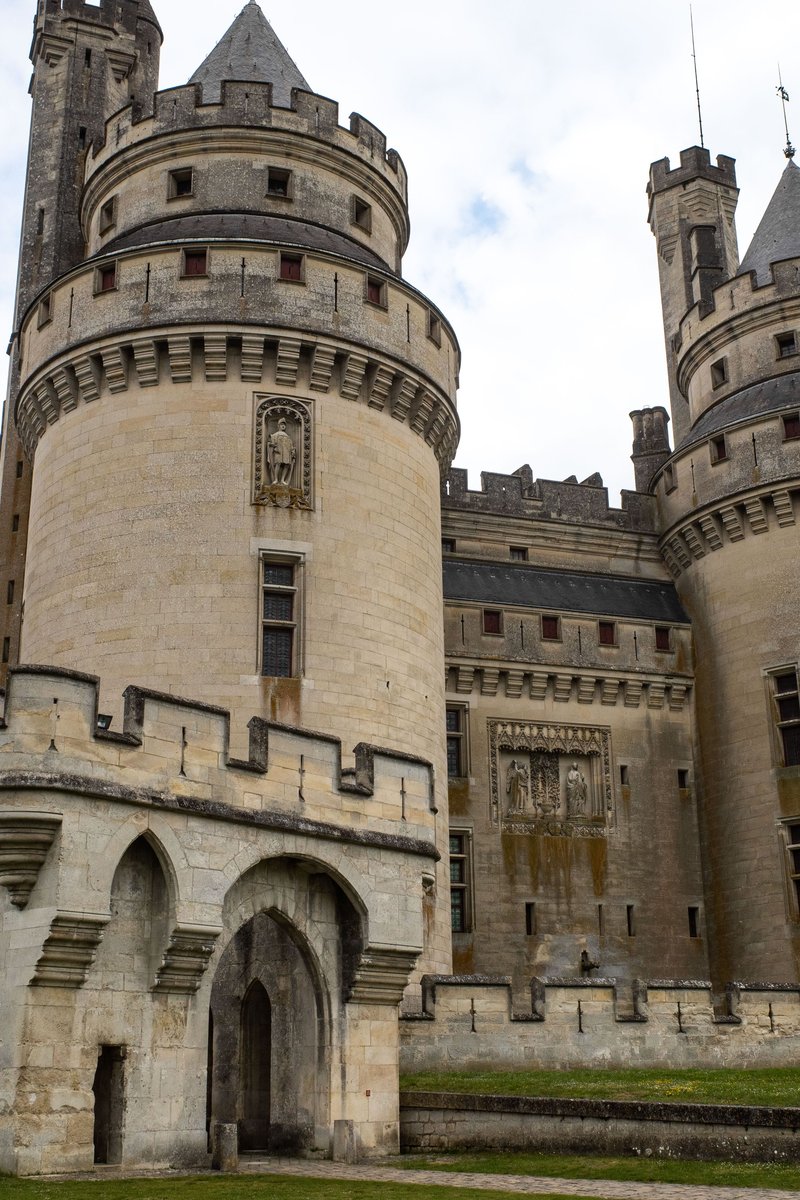
Château de Pierrefonds is the great romantic dream among French castles: a fortress that looks more medieval than the Middle Ages ever managed. A castle has stood on this rocky spur above the village of Pierrefonds, on the edge of the Forest of Compiègne north-east of Paris, since the 12th century; the grand fortified château we see was raised between 1393 and 1407 for Louis I, Duke of Orléans, brother of the king. Dismantled in the 17th century and left a picturesque ruin for two hundred years, it might have crumbled away entirely — had it not caught the imagination of an emperor.
In 1857 Napoleon III commissioned the architect Eugène Viollet-le-Duc — the most famous restorer of his age, the man who reworked Notre-Dame and Carcassonne — to bring Pierrefonds back to life. From 1861 the project became something far bolder than a restoration. Viollet-le-Duc did not faithfully rebuild what had been; he reimagined an idealised medieval castle, in his own words 'in a complete form which might never have existed', complete with soaring towers, machicolated ramparts, painted halls and a riot of carved stone. The result is a masterpiece of 19th-century Romantic and neo-Gothic invention — a building that tells you as much about how the 1800s dreamed the Middle Ages as about the Middle Ages themselves.
That theatrical, perfect-castle silhouette has made Pierrefonds one of Europe's most filmed fortresses. It stood in for Camelot throughout the BBC's Merlin from 2008 to 2012, appeared as the backdrop to the 1998 The Man in the Iron Mask, and has featured in Versailles and many other productions. It is a listed monument historique, not a UNESCO site, and it is managed by the French state. Entry is by open, self-paced ticket: there is no fixed time slot, so with a skip-the-line ticket you simply arrive any time during opening hours, walk straight in past the queue and step into the castle that fantasy made real.